
Nigeria has spent years arguing about masts, spectrum and fibre. The GSMA’s latest numbers say the bigger problem for most offline Nigerians is in their pocket: the phone.
Key facts
- The gap: an estimated 140 million Nigerians live under a mobile broadband signal and don’t use mobile internet (GSMA).
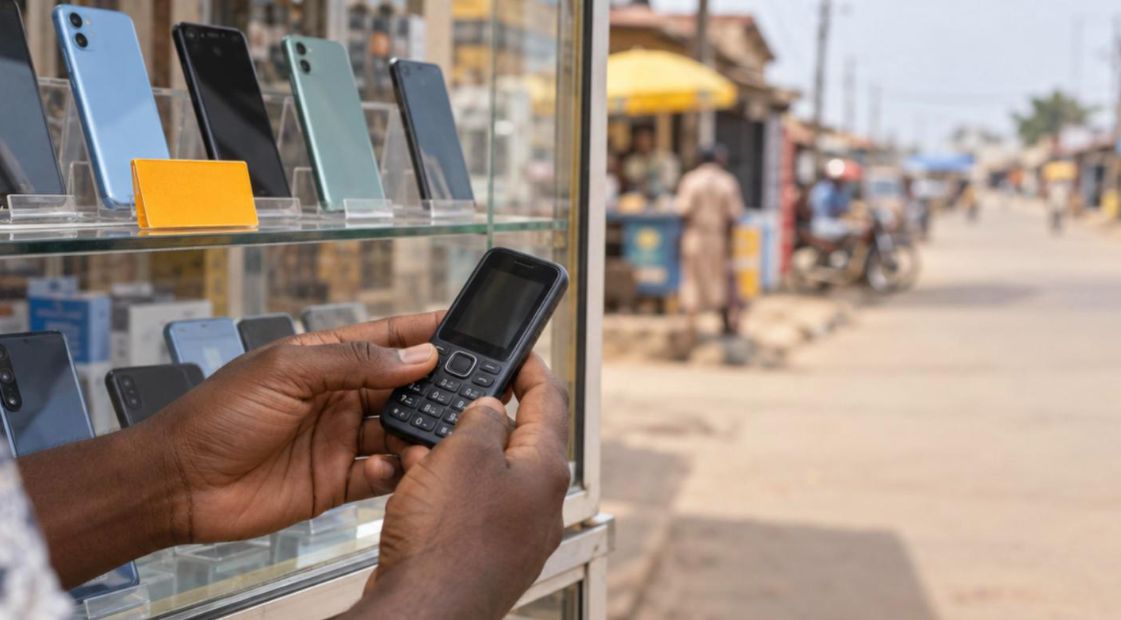
- Awareness isn’t the problem: in rural Nigeria, 86% of people surveyed knew about mobile internet, but only 51% owned a phone that could use it, the same GSMA report found.
- The cost: across Sub-Saharan Africa, an entry-level smartphone can cost up to 76% of average monthly income for the poorest 20% of people.
- What a tax cut did: after South Africa removed a 9% excise duty on smartphones under R2,500 in April 2025, monthly entry-level smartphone sales nearly doubled, from about 250,000 to about 460,000, by the GSMA’s analysis (GSMA).
The network is already there
Ninety-two per cent of Africans now live under mobile broadband coverage; only 28% use mobile internet (Charge Africa). For most of the 140 million Nigerians in that gap, another mast changes nothing. A cheaper phone does.
Make the cheapest smartphones cheaper
The federal government should do two things:
- Publish the full tax bill on a cheap phone. Import duty, VAT and every levy, added up for an entry-level smartphone, so the debate is about real numbers.
- Cut it for phones under a price threshold. South Africa targeted handsets under R2,500. Nigeria could set its own line and measure what happens, as Pretoria did.
There is precedent at home. Nigeria’s new tax laws suspended some overlapping import charges this year, including a 4% Free on Board charge, and importers estimated landing-cost savings of 2% to 6% (Techeconomy).
The case against
Every naira of duty forgone is revenue a stretched government has to find elsewhere. Tax is also not the only driver: smartphone prices in Nigeria have been pushed up this year by global chip shortages, which no tax cut controls (Condia). And duties are sometimes defended as protection for local assembly.
Those are reasons to target the cut narrowly, not to skip it. A cheaper first smartphone brings people into digital banking, e-commerce and the government services the state wants them to use, and every new user pays VAT on what they buy. South Africa’s sales nearly doubled. Nigeria should test whether its 140 million respond the same way.
Related: Mobile broadband reaches 92% of Africans. Only 28% use mobile internet. Why? · More than half of 5G-capable device activity in Abuja now runs on 5G