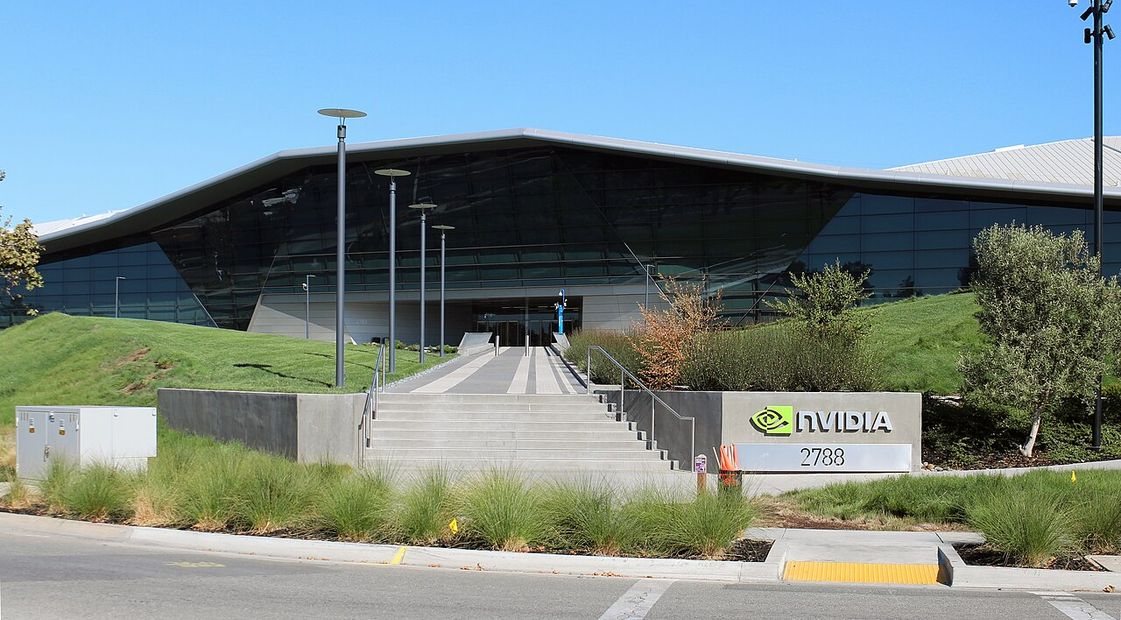
Nvidia has stopped shipping its US-licensed Hopper data-centre chips to China, interim chief executive Colette Kress told analysts on the company’s third-quarter earnings call. The Nvidia China halt ends a line of business that Bloomberg says earned the chipmaker $2.4 billion last quarter.
Key facts
- Kress said: “we are no longer shipping licensed Hopper data center products to China.” She gave no reason. (Business Today, citing Bloomberg)
- Nvidia sold $2.4 billion of licensed Hopper data-centre products to Chinese customers in the quarter to 25 October, according to Bloomberg.
- Nvidia’s fourth-quarter forecast of $130 billion, plus or minus 3%, assumes no data-centre compute revenue from China. (Nvidia)
Hopper is an earlier generation of Nvidia’s data-centre AI chips. The US government had approved these sales to China. Nvidia has not said whether the stop follows any new instruction from Washington.
Kress has led Nvidia as interim CEO since Jensen Huang resigned on 12 November. On the earnings call, chairman Harvey Jones said Huang “voluntarily resigned” after the “disclosure of personal behavior inconsistent with the company’s code of conduct”, TechCrunch reported.
What Nvidia said about China
Kress told analysts that Nvidia’s forecasts no longer include any income from licensed Hopper sales to Chinese customers. She did not explain why the shipments stopped.
The China business was small next to the rest of the company. Nvidia reported third-quarter revenue of $115.8 billion, up 103% on a year earlier, and data-centre revenue of $107.6 billion. By Charge Africa’s calculation, Bloomberg’s $2.4 billion figure equals about 2% of that data-centre revenue.
Kress’s comments followed stricter US checks on exports of AI processors to several countries, issued by the US Commerce Department on 16 November. The concern, Business Today reported, is that buyers abroad could give Chinese companies remote access to advanced chips. Nvidia has not linked the two.
Why the Nvidia China halt matters for Africa
Who gets AI chips is now decided as much in Washington as at Nvidia. That matters for African companies trying to build local computing capacity, which means lower latency for users and data kept inside the country.
Strive Masiyiwa’s Cassava Technologies is in talks with Middle Eastern and US investors to raise up to $1 billion for Nvidia graphics processing units (GPUs), the chips that train and run AI models, Bloomberg reported, citing people familiar with the matter (via TechCabal, 18 November). Cassava declined to comment, and the talks may not lead to a deal. Cassava already runs Nvidia infrastructure in South Africa and plans to expand to Nigeria, Kenya, Egypt and Morocco.
Nvidia’s results release names new infrastructure work in Australia and Europe. It does not mention any African country. The 16 November rule adds licence requirements for advanced chips shipped to Indonesia, Malaysia, Singapore, Thailand and Brazil; no African country is on that list (CNAS). But it also requires a US licence to ship advanced chips to data centres anywhere that serve customers headquartered in China above a set computing threshold, roughly 760 of Nvidia’s H100 chips.
That second part reaches Africa: a data-centre operator in Lagos, Nairobi or Johannesburg that wants to rent large amounts of GPU capacity to Chinese-headquartered customers would need that licence first. For startups building on that capacity, from Lagos to Nairobi, the rules behind the hardware are now part of the business plan.
Nigerian AI builders are already plugging into big-tech programmes. Read: Google’s Africa Applied AI Lab picks three Nigerian startups.
What’s next
Three things to watch: whether Nvidia gives a reason for the China halt, how the 16 November licence rule is applied to data centres outside China, and whether Cassava’s raise closes. Nvidia’s board is also searching for a permanent chief executive, with internal and external candidates under consideration.