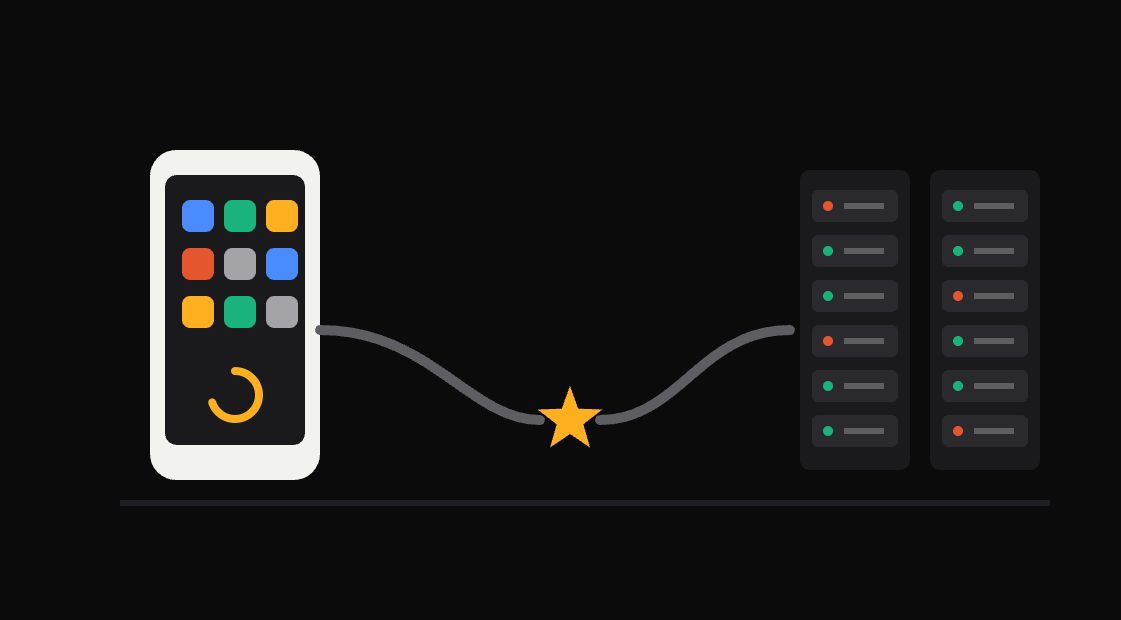
Many African apps run on data centres and cables outside the continent. When wars hit those places, services here slow down or stop. Experts say Africa needs more local infrastructure and better backup plans.
In October, people in Côte d’Ivoire using Yango, the ride-hailing and food delivery app, found bookings were slow. Taxis took longer to confirm, and deliveries lagged, Semafor reported on 11 November.
The cause wasn’t local network or power problems. It came from thousands of kilometres away, and it shows how much Africa’s digital services depend on infrastructure abroad.
What happened?
Yango told Semafor the problems came from infrastructure changes in the Gulf. A partner had warned in September that infrastructure affected by Iranian attacks could no longer support Yango’s work, so operations had to move to a different data centre, spokesperson Hadil Elmaki said. She described the problems as “intermittent issues”, not widespread outages.
It isn’t the only case. According to Semafor:
- Amazon said in mid-September it could not restore one of its three data centre zones in the UAE after Iranian drone strikes in March. Public records show Yango uses Amazon’s cloud servers in the UAE.
- Egyptian publisher EnterpriseAM, which also used UAE-based servers, was offline for more than a day in March.
- Undersea cables in the Red Sea were damaged in 2024, and attacks on ships there made repairs harder.
West Africa has been here before. On 14 March 2024, failures on four undersea cables (WACS, MainOne, SAT-3 and ACE) disrupted internet access in 13 countries, including Côte d’Ivoire, Ghana and Nigeria, Cloudflare reported.
Why it matters
A data centre is a building full of computers that run apps and websites. Many African businesses rent space in data centres abroad, because there aren’t enough at home. Much of the continent’s internet traffic also travels through undersea cables.
So when a war hits a data centre in the Gulf, or a cable under the Red Sea, the damage can reach a taxi app in Abidjan or a payment in Lagos.
“This is the new line of warfare,” Jane Munga, a technology policy researcher at the Carnegie Endowment for International Peace, told Semafor.
Amreesh Phokeer, research director at the Internet Society, asked whether governments will invest in local infrastructure, or rely even more on outside providers.
Is anything changing?
Slowly. Mauritania launched a national cloud service for its public administration in June. Gabon opened a new data centre for government and business services in July (Semafor).
Local data centres alone are not enough, Phokeer said. He pointed to Ukraine: its internet held up after Russia’s 2022 invasion because it was not concentrated in a few sites and could route traffic through neighbouring countries.
What to do next
- For everyday users: keep a backup. Have a second payment app, a second network SIM, or a little cash for days when apps fail.
- For businesses: ask your tech providers where your systems are hosted and what happens if that site goes down.
- For founders: spread your systems across more than one location, with backups inside and outside your country.