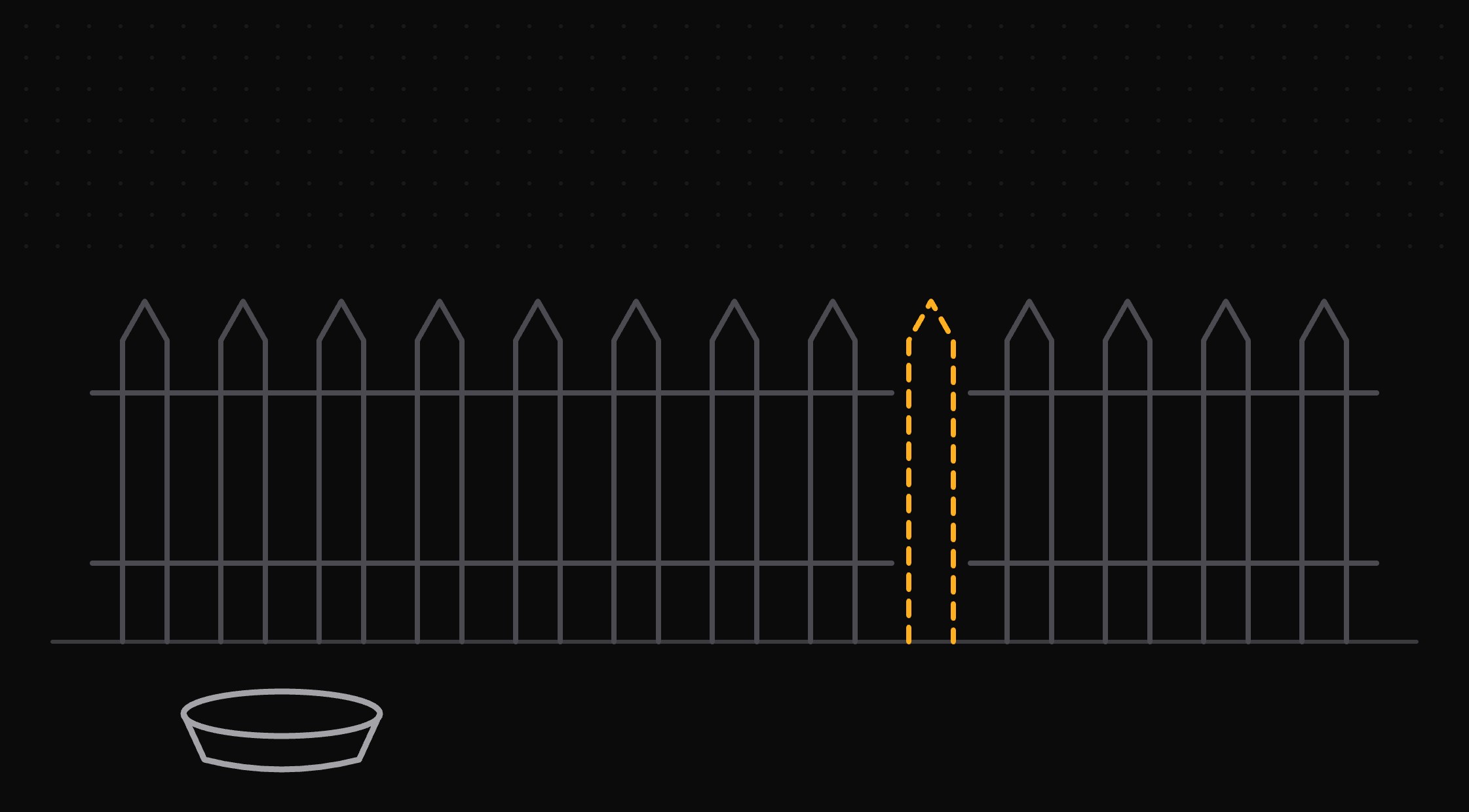

There is an old story about a shepherd. He kept sheep, and wolves lived in the hills nearby. So he kept a dog, and every night the dog barked the wolves away from the fence. A whole year went by without a single sheep lost. The shepherd looked at the quiet year and drew the wrong conclusion: no wolves, so why feed the dog? First he halved its food, then cut it to scraps. The dog grew weak, its rounds got shorter, and one night it did not come back. Within days, the wolves were back among the sheep.
The wolves had never left. The dog was the reason the year was quiet. The idea is ancient: in one of Aesop’s fables, the sheep complain that the dog eats meat while they get only grass, and the dog replies that without him the wolves would eat them all (The Sheep and the Dog). There is a name for this trap: the preparedness paradox. The better protection works, the less it seems to be needed.
Cybersecurity has the shepherd’s problem. When it works, nothing happens, and nothing is hard to defend in a budget meeting. The firewall that blocked a thousand attempts last month shows up as a cost line, not a saved business. So security gets fed last.
This year the wolves came back. Kenya is investigating a claimed breach of eCitizen, the portal for passports and IDs. South Africa’s EasyEquities restricted logins after “a security incident affecting some of our systems”. Zenith Bank confirmed in August that customer emails and phone numbers had been accessed. Globally, North Korean hackers took about $6.36bn from Binance in October (our explainer has the full pattern).
We never fed the dog properly
This is not a story about Africa cutting security budgets. It is about never having fed the dog properly in the first place. Consulting firm Kearney put the benchmark for cybersecurity spending at about 0.25% of GDP. South Africa spends 0.19%; the rest of sub-Saharan Africa about 0.03% (Kearney, via We Are Tech Africa). Those are 2023 figures, but nothing since suggests the gap has closed.
The one time Nigeria tried to pay for a national guard dog, the public refused. In May 2024, the Central Bank told banks to charge a 0.5% cybersecurity levy on electronic transfers. After an outcry over timing, during a cost-of-living crisis, the circular was withdrawn within two weeks (Techeconomy). The anger was fair: the levy landed on ordinary people with little explanation. But the bill did not go away. It just stopped being anyone’s job.
The wolves came through the neighbour’s yard
There is a twist the old story does not have. Many of this year’s victims did feed their own dog. The wolves came through someone else’s yard.
1Password, a company whose whole business is security, was reached through an employee’s GitHub account (The Hacker News). EasyEquities customer data was exposed in September through RelyComply, the vendor that checks customers’ identities (TechCentral). Nigerian lenders reportedly lost money in October after a core banking software vendor was breached. In 34 of the 42 incidents threat-intelligence firm CYFIRMA analysed this year, attackers reached their target through a supplier (CYFIRMA).
And the wolves are getting cheaper to send. INTERPOL says AI is now involved in about 55% of reported cybercrime in Africa (INTERPOL).
How to feed the dog
- Boards should count what didn’t happen. Ask for the attacks blocked, the fraud stopped and how fast systems came back in the last drill. Quiet should be reported as a result, not mistaken for an absence of risk.
- Buyers should check the neighbour’s fence. Every bank, fintech and agency should ask its software and verification vendors for evidence of security testing and a deadline for telling customers about a breach, and walk away from vendors that cannot give one.
- Regulators should make supplier breaches public. When a vendor is breached, the institutions that use it, and their customers, should not learn about it from a hacker forum.
- Governments should fund security openly. Nigeria’s levy failed partly because nobody explained what it would buy. A national defence budget for the digital economy needs a clear price and a clear purchase.
The shepherd’s mistake was not the wolf. It was reading a quiet year as proof that the dog was a waste. Africa’s digital economy has had a loud one. It should not wait for another before it feeds the dog.