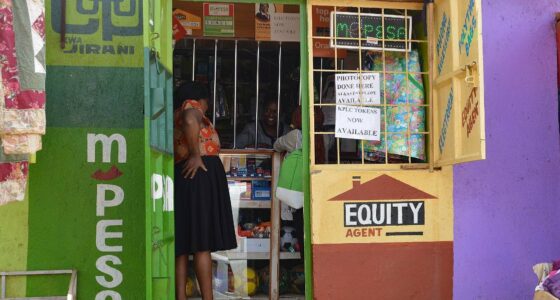

MTN wants to turn its mobile money business into something closer to a bank. Group chief executive Ralph Mupita, speaking at Semafor’s Next Three Billion summit in Johannesburg, said the company is seeking a regional banking licence in Nigeria and financial services licences in Ghana and Rwanda, and expects to receive them within the next year or two (Semafor, Techpoint Africa). That timeline is MTN’s own estimate; it is not clear whether formal applications have been filed in all three countries.
Key facts
- Nigeria: a regional banking licence. Ghana and Rwanda: financial services licences (Semafor).
- Timeline: within the next year or two, MTN’s estimate.
- Scale: 70.3 million active MoMo users at 30 September and $512.5 billion of fintech transactions in the nine months to September, up 36.9% (MTN’s third-quarter update).
- Today in Nigeria: MoMo Payment Service Bank holds a CBN licence, but the CBN’s rules bar payment service banks from lending; it offers loans through partner banks and lenders.
- Background: Mupita said in August that MTN would explore a licence that lets it take deposits (Semafor).
Why it matters
A payment service bank in Nigeria can take small deposits and move money, but it cannot lend. A banking licence would let MTN lend from its own balance sheet to the millions of people who already use its SIMs and wallets, putting it in direct competition with OPay, Moniepoint and PalmPay, as well as the banks. Lending is where the money is in African fintech, and MTN has the customer data and the distribution that most lenders lack.
It also lands as Nigeria debates how to supervise fintechs that already behave like banks. The House of Representatives passed changes to the Banks and Other Financial Institutions Act on 18 November that could bring the largest payment companies under bank-style rules; the bill still needs presidential assent (our BOFIA explainer).
What we don’t know yet
- whether MTN has applied to the Central Bank of Nigeria, and for which category of licence;
- whether a bank would be separate from MoMo PSB or replace it;
- how regulators in Ghana and Rwanda will respond.
Related: our coverage of MTN’s Telkom deal