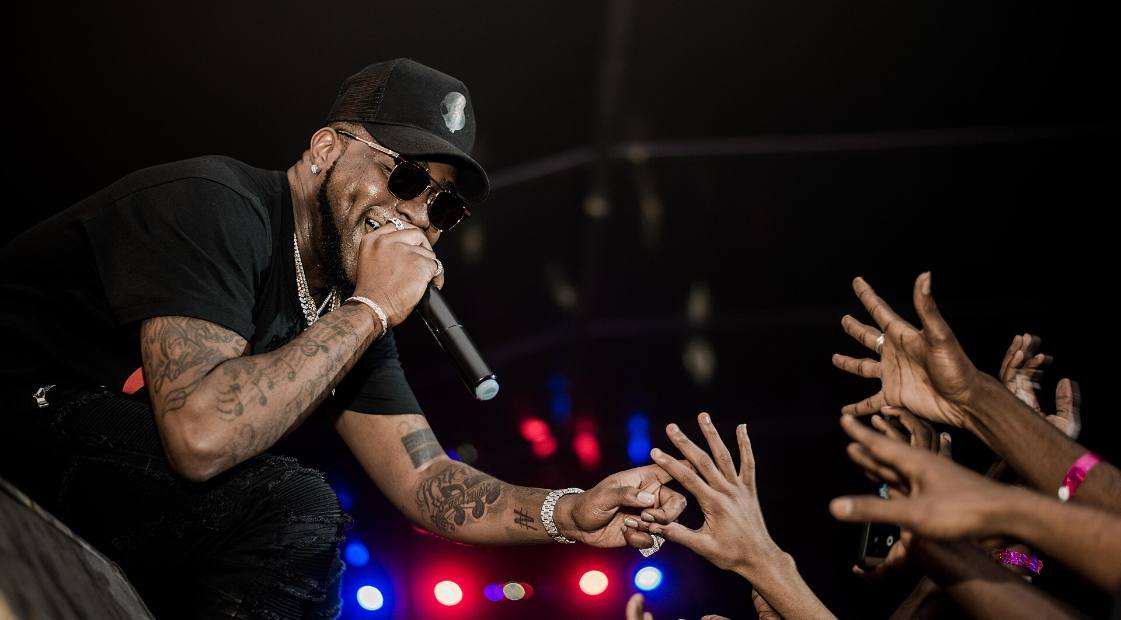
Davido says his foundation will give Nigerians money to start businesses, and that it starts on Monday. “This year for my birthday my foundation will not only be sending money to the motherless babies homes as usual .. we also want to help Nigerians with start up funds for their business ideas as we know how difficult the situation in the country has been . We start Monday,” the singer posted on X on Friday 20 November, the eve of his birthday (Davido on X).
Key facts
- What he promised: start-up funds for Nigerians’ business ideas, from his foundation, alongside its usual birthday donations to orphanages.
- When: “We start Monday”, which is 23 November.
- What we don’t know yet: how much money, how many people, whether it is a grant or something else, who decides, and how to apply.
- The foundation: the David Adeleke Foundation (DAF), which Davido says he founded in 2022 after his 2021 birthday fundraiser for orphanages (Joy Online).
Why it matters: Nigeria’s smallest businesses, the ones with an idea and no investor, rarely get any outside money at all. A celebrity with millions of followers deciding to fund them is welcome news. But a post with no details is not a programme yet, and the first people likely to profit from it are scammers pretending to run it.
Does Davido follow through?
On his birthday donations, the record says yes, with some rough edges.
In November 2021, Davido shared his account details and invited friends to send him birthday money. About ₦200 million came in within 72 hours; he added ₦50 million and said it would all go to orphanages. In February 2022 he said the full ₦250 million had been paid to 292 orphanages, and posted the list by state (Ripples Nigeria).
It was not flawless. The Association of Orphanages and Homes Operators in Nigeria (ASOHON) told Daily Trust that it had put forward 592 homes, that only 292 were reached, and that “several unregistered homes, closed down homes and non-existing homes” were among those paid (Daily Trust). Daily Trust did not report the committee’s response.
The giving continued. In July 2023 Davido said his foundation had given ₦237 million to 422 orphanages (Joy Online), and on his birthday in 2024 the foundation announced ₦300 million for charitable causes (notJustOk).
What’s his history with startups?
Shorter, and more mixed.
- Bitsika (2020): Davido became an ambassador and shareholder of the payments app, and joined its board with his manager and lawyer. He called it his “first FinTech partnership” (notJustOk).
- ALAT by Wema (2021): weeks after the orphanage fundraiser, Wema Bank signed him as the face of its digital bank (Legit).
- $DAVIDO (2024): he promoted a memecoin on Solana in several posts. It reached a market value of about $10 million within hours, then fell sharply by the next morning; one trader called it “obviously a pump and dump scheme” (TechCabal). Nigeria’s Securities and Exchange Commission then warned that it does not recognise $DAVIDO as an investment product and that people who buy it do so “at their peril” (Techpoint Africa).
None of these is a track record of funding small businesses or first-time founders. That makes Monday new territory for him, and for the foundation.
Should you be excited?
Cautiously, yes. Three things will decide whether this is real help or just a moment:
- The size of each cheque. Spread across thousands of applicants, even a large total can become small amounts. For a food vendor or a phone-repair shop, a small amount can still change a month. For a tech startup, it probably won’t replace a real raise.
- How people are chosen. If selection runs through replies and retweets, it rewards whoever is loudest online, not whoever has the best business. A published process, like the committee he used for the orphanages, would be better.
- What it costs you. If it is a grant, there is no catch. If it asks for a share of your business or repayment, read the terms before you accept anything.
How to get ready before Monday
You don’t need to know the rules to prepare. Whatever the format, people who can explain their business in a few lines, and show proof, will stand out.
- Write your one-line pitch. “I sell [product] to [customer] in [city], and they pay because [reason].” If you can’t say it in one line, you’re not ready to ask for money.
- Show proof, not promises. Photos of your product, a short video of your shop or stall, a screenshot of orders, a list of regular customers. A business that already sells, even a little, is easier to fund than an idea.
- Know exactly what the money buys. “₦300,000 for a second-hand freezer so I can sell chilled drinks” beats “support for my business”. Price it out.
- Record a 60-second video. If applications run on social media, a clear, honest video of you explaining your business will travel further than a long caption.
- Get your basics in order. An account in your own name that matches your ID. If you can, register a business name with the Corporate Affairs Commission; it helps with this and with every grant after it.
- Have a plan B. Davido’s fund may pick only a small share of a very large crowd. Our list of funding opportunities for Nigerian startups closing before 15 December is a good place to apply in parallel.
How not to get scammed
Expect fake accounts and fake “application links” from today. Trust only what Davido posts from his verified account, @davido, and any account or link he names there himself. Nobody genuine will ask you for an “application fee”, “processing fee”, your BVN, your card PIN or a one-time code. If a stranger in your DMs says you’ve been selected, assume it’s a scam.
Related: 7 funding opportunities for Nigerian startups closing before 15 December · iDICE backs eight startups with $100,000 each