Shalom Rayhamen finished building Lagos Life at about 5 a.m. on 1 October 2026 and posted the link at 7 a.m. Within nine days, her new company, Vatar, said 4.7 million people had played, and it had announced a $500,000 angel round. No one outside the company has verified those player numbers, and that is part of the story.
Key facts
- Lagos Life, a free Sims-style life game set in a shared virtual Lagos, launched at 7 a.m. on 1 October 2026, Nigeria’s Independence Day. Rayhamen built it overnight (Zikoko).
- It passed one million players in three days and 4.7 million in nine, according to the creator and Vatar. These figures are self-reported (Techpoint Africa; Vatar).
- Vatar raised a $500,000 angel round from founders including Flutterwave’s Olugbenga Agboola, Mono’s Abdulhamid Hassan and Terra Industries’ Nathan Nwachuku (Vatar). Reports put the valuation at $10 million (WeeTracker).
On Tuesday we told the story of Danfo Run, the danfo game that showed a Nigerian browser game could spread in days. Lagos Life went further. It built a shared city that players could live in, and it was selling billboards inside that city within its first days.
Why it matters: Nigerian studios have spent more than a decade trying to turn players into revenue, from telco billing to app-store ads. Lagos Life says it earned more than $46,000 in its first four days, before it had a company. If even part of that holds, it points to a model African game makers have long looked for: free to play, paid for by brands and by players who want to stand out in a world that looks like home.
Built in one night
Rayhamen, 26, grew up in Port Harcourt and received a UK Global Talent Visa in 2023, she told Zikoko. Days before Lagos Life, she saw that “someone had made a Danfo driving game that was trending on Twitter.”
She started “building a game for fun on a Wednesday night,” finished “at about 5 a.m. on October 1,” and tweeted the link at 7 a.m. Zikoko put the build at about eight hours of work, done in under 24 hours.
The idea was older. “I grew up playing The Sims 3 and always wondered what it would be like if the Sims lived in a world inspired by ours,” she said, as quoted by Arise News. She told Zikoko she felt The Sims “wasn’t localised enough.”
I grew up playing The Sims 3 and always wondered what it would be like if the Sims lived in a world inspired by ours.🤷🏽♀️
Then I saw @eureka_seamless riding a danfo through Lagos, and it sparked an idea: Lagos Life Sims.
Take a look around. Who knows, you might make a new friend… https://t.co/gusz1oeElx pic.twitter.com/cxAIEeWeHZ
— Shalom Rayhamen (@Shalom_HeyEliy) October 1, 2026
Her name appears in several forms. Arise News calls her Ijeoma Shalom Rayhamen, and some outlets report her surname as Mathew. Vatar’s website lists her as Shalom Rayhamen.
Nepo or Lapo: what players do
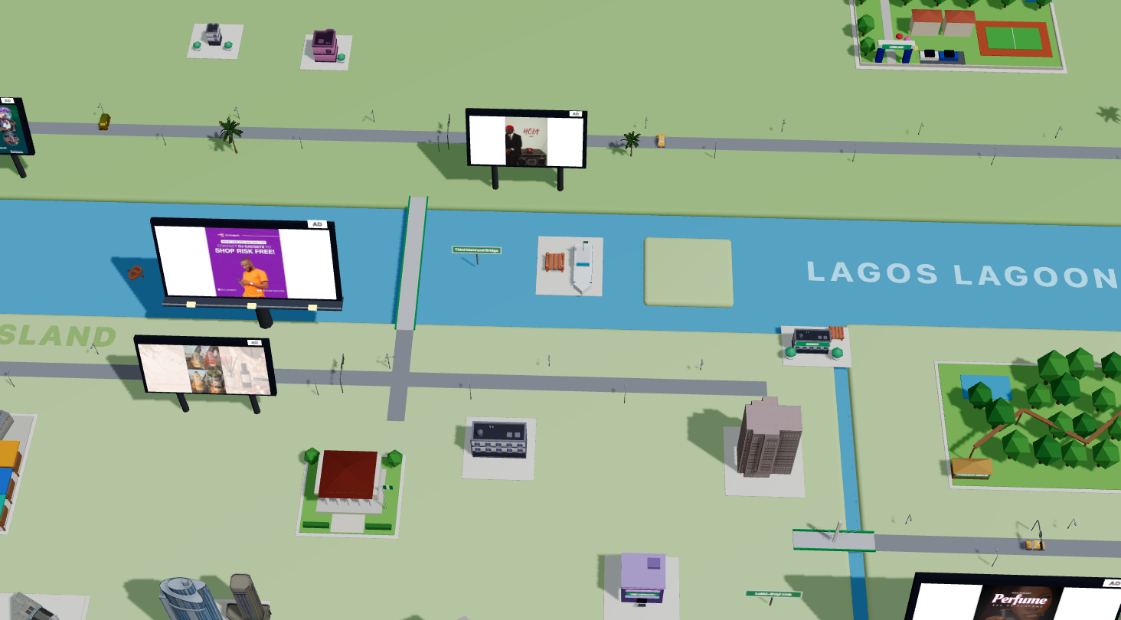
Every player starts as either “Nepo”, born into money and connections, or “Lapo”, a nod to microfinance, starting with loans and hustle. The game picks for you (BusinessDay).
From there you find a job, pay rent, manage your energy, buy food and go out. The map includes Amala Shitta and Quilox. The clock runs on real Lagos time, and you can see and chat with other players. Nigerian music plays in the clubs, and the in-game phone carries a Chowdeck app (Techloy).
Within days, Abuja and Port Harcourt were added as playable cities (WeeTracker). Players signed up from the US, the UK, Ghana, Canada and the Netherlands, according to Communiqué.
The numbers, and how far to trust them
Lagos Life’s growth has been reported almost entirely from the creator’s own dashboard and posts. Here is every major figure, with who reported it.
| Date | Figure | Who reported it | Independent? |
|---|---|---|---|
| 1–4 Oct | 1 million players within three days | Rayhamen, via Techpoint Africa | No |
| 5 Oct | 1,212,477 players, 71,625 online, 9.6 million visits | Game dashboard, via Techpoint Africa | No |
| Week to 5 Oct | Nigerian searches for “Lagos life” up more than 5,000% | Google Trends, via Technext | Yes |
| 8 Oct | 4.3 million players from 15 countries; 200,000+ online at once | Company figures reported by TechCabal, via Techloy and Communiqué | No |
| By 10 Oct | 7 million+ sign-ups; 1.4 million daily active players | Rayhamen’s dashboard, via Communiqué | No |
| First nine days | 4.7 million+ players; 1.5 million+ average daily players | Vatar website | No |
| 10 Nov | “103k active today”; 73.0 million visits | Game homepage, checked by Charge Africa | No (company counter) |
Two cautions. Some users questioned how players are counted (Techpoint Africa), and a visit of a few minutes counts toward the total (WeeTracker; Technext). The company’s own figures also differ: Vatar’s site says 4.7 million players in nine days, while Rayhamen’s dashboard showed more than 7 million sign-ups by day 10.
Local outlets compared the one-million mark with ChatGPT, which took five days to reach a million users after its 2022 launch (Technext). The comparison is striking, but a ChatGPT user and a Lagos Life player are not counted the same way.
The Google Trends spike is the one independent signal, and it is large.
How a free game makes money
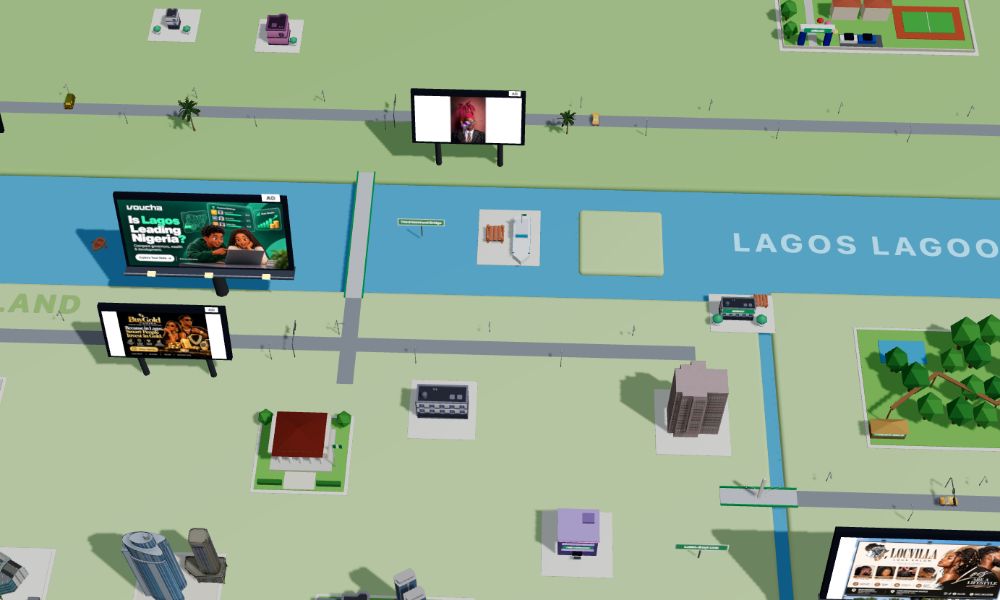
Lagos Life charges nothing to play. It earns from what happens inside the city.
- Billboards. At launch, businesses could rent one of 38 virtual roadside billboards for ₦5,000 (about $3.77) a week. Tapping a billboard opens the advertiser’s link (Techpoint Africa).
- Land and the stats page. A lagoon plot cost ₦18,000 a week. A slot on the live stats page went from ₦50,000 for 30 days to ₦100,000 for seven days in two days (Techpoint Africa).
- Music. Artists paid ₦50,000 to have a track played in the virtual clubs (WeeTracker).
- Top-ups. Players can buy in-game money in bundles from ₦500 to ₦20,000 (Zikoko).
- Brand deals, such as Chowdeck’s app on the in-game phone (Communiqué).
Early buyers included Salary Index, Leadway Lifestyle Fair, MyDecorTrade and ONErpm, along with small businesses and independent artists (Techpoint Africa).
“Currently, I’ve earned over $46k,” Rayhamen told Zikoko in the first week. Vatar later said it had earned or signed more than $170,000 (Communiqué; Techloy). Signed deals are not cash in the bank, Communiqué noted, and Vatar has not shared its costs.
Compare that with 2016, when Gamsole founder Abiola Olaniran said: “You cannot successfully monetise mobile games in Nigeria without telco involvement” (Techpoint Africa). Lagos Life took payments directly from advertisers, with no telco in the middle.
From game to company in nine days
Rayhamen and her co-founders incorporated Vatar Inc. on 6 October (WeeTracker). She is CEO and CTO. Owen Rayhamen is chief product officer and Anderson Oriahi is chief business development officer (Vatar).
On 9 October, Vatar announced a $500,000 angel round to bring new cities online, according to its website. The site names three investors: Abdulhamid Hassan of Mono, Nathan Nwachuku of Terra Industries and Olugbenga Agboola of Flutterwave. Reports also name Oo Nwoye (WeeTracker; Condia).
Vatar’s site does not state a valuation. TechCabal reported a $10 million valuation and said the round closed in a single day, according to UrbanGeekz and Techloy. No lead investor has been named.
On 22 October, Condia reported that Vatar was in talks to raise a $2.5 million pre-seed round at a target valuation of $15 million, citing people familiar with the talks. The company had not confirmed it (Condia).
Growing pains
Fast growth broke things.
- An outage on 2 October. Every player received ₦100,000 in virtual cash as an apology (Techpoint Africa).
- An exploit let some players create huge balances, some running into trillions of virtual naira. Rayhamen reset the bad balances, restored legitimate ones and said she would add income tax to the game (Technext; WeeTracker).
- One coder. “I’m still the only coder on the game,” she told Zikoko in the first week.
- A token she didn’t make. An unrelated account launched a $LAGOSLIFE crypto token. Rayhamen has not presented it as official (Techpoint Africa).
One more thing for players: on 9 November, a web search for “Lagos Life” returned several lookalike sites and a Google Play app using the name. Charge Africa has not found any link between them and Vatar. Vatar’s own website links to lagoslife.app.
How Lagos Life eclipsed them all
Danfo Run proved a link could travel. But it is a single-session game: you drive, you score, you leave. Lagos Life added a persistent world with other people in it (Technext), plus a way to get paid in its first week.
It also set off a wave of copies. London Red Bus and PH Lifestyle followed quickly (Communiqué). When Marvellous Nwachukwu launched Oya Jam, a free directory of Nigerian browser games, on 1 October, it listed 191 games, 131 of them Nigerian (Launch Base Africa).
Nwachukwu is sceptical of the rush. “So it is a fad, just like people are creating crypto coins,” he told Launch Base Africa. We see it differently, and next week we spotlight the games that followed Lagos Life, and what they say about who is building in Nigeria right now.
What’s next
Vatar’s site lists its next city as “in development.” The tests now are retention and repeat advertisers: whether players keep logging in after the launch buzz, and whether brands renew their billboards. WeeTracker has asked whether players will stay once the novelty fades (WeeTracker).
Watch for the $2.5 million round, and for whether Vatar publishes figures someone outside the company can check.
Playing Lagos Life? Tell us your Nepo-or-Lapo story at [email protected]. And get The Charge, our newsletter, every other Monday: sign up below. New to Charge Africa? Here’s what we cover.